Camper Shoes are a Spanish footwear brand known for their unconventional silhouettes and comfort-first construction. Founder Lorenzo Fluxà launched the company in 1975 on the island of Mallorca, and the brand now sells in more than 40 countries, according to its official history page.
Table of Contents
- 1. Understand What Makes Camper Shoes Different
- 2. Get the Sizing Right Before You Order
- EU to US Size Conversion
- Width and Volume Notes
- 3. Choose the Right Camper Style for Your Needs
- Popular Camper Models Compared
- 4. Spot Authentic Camper Shoes and Avoid Fakes
- Red Flags in Listings
- 5. Find the Best Price Without Buying Counterfeits
- Do Camper Shoes Fit Wide Feet?
- How Do Camper Shoes Fit Compared to Nike or Adidas?
- Are Camper Shoes Good for Plantar Fasciitis?
- How Long Do Camper Shoes Last?
- Can You Resole Camper Shoes?
- Conclusion
Buying the wrong size or model is the most common issue shoppers face because Camper’s European sizing and rounded toe shapes do not fit like standard athletic sneakers. This guide covers what makes the brand different, how to size correctly, which models suit different feet, how to avoid fakes, and where to find fair prices.
Use these five practical points before you add a pair to your cart. A few minutes of research now can save you the cost and hassle of a return.
1. Understand What Makes Camper Shoes Different
Camper Shoes are built around a simple idea: footwear should support the natural movement of your foot rather than force it into a conventional shape. According to Camper’s official heritage page, the company was founded in 1975 in Mallorca, Spain, and has remained rooted in family shoe-making traditions.
The brand introduced the Pelotas style in 1995, and it still anchors the collection today.
Key design features you will notice on many current models:
– Rounded toe boxes that allow natural toe splay
– Flexible, lightweight rubber outsoles
– Leather linings and minimalist heel support
– Asymmetric or curved lasts on styles like the Right
These features mean a pair can feel soft underfoot on day one, but the lack of rigid arch support surprises buyers who expect a structured stability shoe.
Think of Camper Shoes as a flexible middle ground between a sneaker and a casual leather shoe. How to apply this: Before you compare models, pick up any pair and bend the sole gently; a Camper sole should flex from heel to toe without much resistance.
2. Get the Sizing Right Before You Order
Camper Shoes use EU sizing, which is why many first-time buyers order a full size too large or too small. EU sizes advance by 6.67 mm per full size, but US and UK conversion charts vary by retailer and model. Instead of trusting a generic conversion table, match your foot length in centimeters to the specific style’s size chart.
EU to US Size Conversion
– Measure your longer foot from heel to longest toe in centimeters
– Add 5–10 mm of toe space for thicker socks or wider feet
– Use the style’s centimeter measurement, not the US size label
– When between sizes, choose the larger size for closed-toe leather styles
Width and Volume Notes
Some Camper Shoes, such as the Peu and Pelotas, have generous toe boxes but a snug midfoot. Narrow-foot buyers often drop half a size in these styles, while wide-foot buyers may need the same length but a roomier model.
A common scenario: you wear a US 9 in a Nike running shoe, but a Camper size 42 may feel shorter in the toe and roomier across the ball. How to apply this: Trace your bare foot on paper, measure the longest point in centimeters, and check that number against the product page before you order.
Visit the Camper Official Website →
3. Choose the Right Camper Style for Your Needs
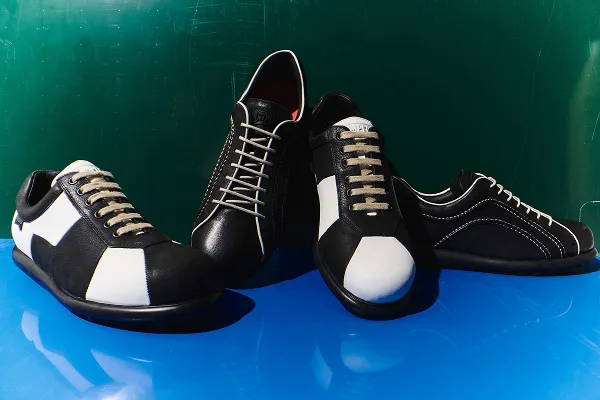
Not every pair of Camper Shoes fits the same purpose, so matching the silhouette to your typical day matters. The Pelotas model, introduced in 1995, remains the brand’s most recognized walking style and uses a cushioned, rounded sole. Other models prioritize lightness, slip-on convenience, or a more formal look.
Popular Camper Models Compared
| Model | Best for | Key feature | Action to take |
|---|---|---|---|
| Pelotas | All-day walking | Cushioned rounded sole | Try a half size down |
| Right | Casual office wear | Asymmetrical flexible sole | Order your EU size |
| Peu | Minimalist errands | Low-profile soft leather | Wide feet choose half size up |
| Runner | Retro daily wear | Lightweight breathable upper | Check EU-to-US conversion |
| Beetle | Warm-weather wear | Slip-on flexible construction | Wear thin or no-show socks |
The table covers five common uses, but personal fit still wins.
If you stand for long shifts, a Pelotas or a style with a thicker sole may work better than a flat Peu. How to apply this: Before buying a second pair of Camper Shoes, write down where and for how long you will wear them, then choose the model column that matches that daily scenario.
4. Spot Authentic Camper Shoes and Avoid Fakes
Camper Shoes are widely counterfeited, especially popular Pelotas and Runner styles on auction and resale sites. The easiest way to avoid a fake is to check the physical details against photos from an authorized seller before you pay.

Current Camper models usually print the style name and size on the tongue or insole, and the outsole tread should be clean and evenly molded.
Upload a listing photo to Google Lens to compare the shape, stitching, and logo against official product images. If you buy from a resale marketplace, choose a platform with a verification step, such as StockX, which authenticates certain footwear categories before shipping.
If a new pair of Camper Shoes arrives with loose threads, uneven sole paint, or a flimsy box, request a return immediately.
Red Flags in Listings
– Blurry or repeated stock photos
– No photo of the outsole or inner size tag
– Sellers who switch reviews or use newly created accounts
– Prices far below the range of authorized retailers
How to apply this: Before paying for any secondhand pair, ask the seller for a clear photo of the inner size tag and the bottom tread, then compare those images side by side with the official product page.
5. Find the Best Price Without Buying Counterfeits
Smart shopping for Camper Shoes means comparing a small set of authorized and verified channels rather than chasing the cheapest listing. Use Google Shopping to see current prices across retailers and local shops in one view. The official Camper site also runs a dedicated sale section, and past-season styles often move to clearance through department stores and authorized online shops.
Seasonal timing matters. Many retailers mark down Camper footwear at the end of spring and fall, but popular core colors in the Pelotas and Right lines sell out before the deepest discounts arrive. Authorized sellers rely on Camper Shoes’ official style codes, so search by that code instead of a vague model name.
– Compare three authorized sellers before buying
– Check the return policy in writing
– Look for free returns or a nearby store for exchanges
– Track the exact style name, not just “Camper sneakers”
How to apply this: Pick a current style, run its name through Google Shopping, filter by your size, and save a screenshot of the three lowest authorized prices before you buy.
Visit the Camper Official Website →
Frequently Asked Questions About Camper Shoes
Do Camper Shoes Fit Wide Feet?
Camper Shoes often fit wide feet better in the Pelotas and Peu models because those lasts have round, roomy toe boxes. If you need extra width, choose a half size larger in one of those styles rather than a narrow model like the Right.
The midfoot may still feel snug, but the toe area provides more space than typical European dress shoes.
How Do Camper Shoes Fit Compared to Nike or Adidas?
Camper Shoes generally run shorter and wider in the toe than Nike or Adidas running shoes. A person who wears a US 9 in Nike may need a EU 42 in Camper, but this varies by model. Because Nike and Adidas use different lasts and performance fits, use your centimeter foot length instead of assuming the same size carries over.
Are Camper Shoes Good for Plantar Fasciitis?
Camper Shoes can work for plantar fasciitis if you choose a cushioned, supportive style like the Pelotas and add a removable orthotic. The soft, flexible sole alone may not provide enough arch support for some people. If your heel pain is severe, check with a podiatrist before relying on a minimalist slip-on style.
How Long Do Camper Shoes Last?
With regular use, many Camper Shoes last several years because leather uppers and stitched or glued rubber outsoles hold up well. If you rotate two pairs and keep the leather conditioned, you may extend the life beyond that range. Heavy daily walking on abrasive pavement wears the outsole faster, so inspect the tread before buying secondhand.
Can You Resole Camper Shoes?
Some Camper Shoes with stitched cup soles can be resoled by a good cobbler, but many cemented lightweight models are not designed for resoling. A cobbler can often glue on a thin protective sole before the original wears through. If you want long-term repairability, choose a model with a visible stitched sole and ask the repair shop before buying.
Conclusion
Camper Shoes are worth the research if you match the model to your foot shape and buy from an authorized channel. Use these takeaways before you check out.
– Measure your foot in centimeters and ignore loose US conversion charts
– Match the model to your daily use, not just the look
– Verify authenticity with official photos and a size-tag image
– Compare three authorized sellers and save the return policy
Start with one versatile style like the Pelotas, order from a seller with free returns, and walk indoors on carpet before you commit to outdoor wear. The right pair of Camper Shoes should feel flexible but not sloppy underfoot. If the toe feels cramped or the heel slips, exchange for the next half size.
If the sole flexes too much for your arch, try an insole.
Visit the Camper Official Website →